
For today’s Throwback Thursday, I have a fascinating relic from my collection. When I was younger I collected old books, not just because of their age, but if I am interested in them. I have no more room to house them and so no longer seek them out, but back in the day I would go to garage sales, thrift stores and other places to skim through interesting books. Now I collect them on my Kindle. Not as romantic, but very practical in terms of storage.
Today is the 79th anniversary of V-J Day; Victory over Japan at the end of World War II, when they announced their surrender. Clarification: it was August 15 in Japan, though it was announced on August 14 in the United States. The iconic photos of the signing of the surrender documents on board a warship did not come until September 2.
The book I found, and still treasure to this day, is from shortly after that period. While I do not endorse or celebrate its purpose, it is a unique document of the time period and a window into every conquering nation over a vanquished nation for time immemorial. Where once a marauding army had their way with a defeated enemy, including their people, America chose a more calculated and more chilling approach. They wrote a book.
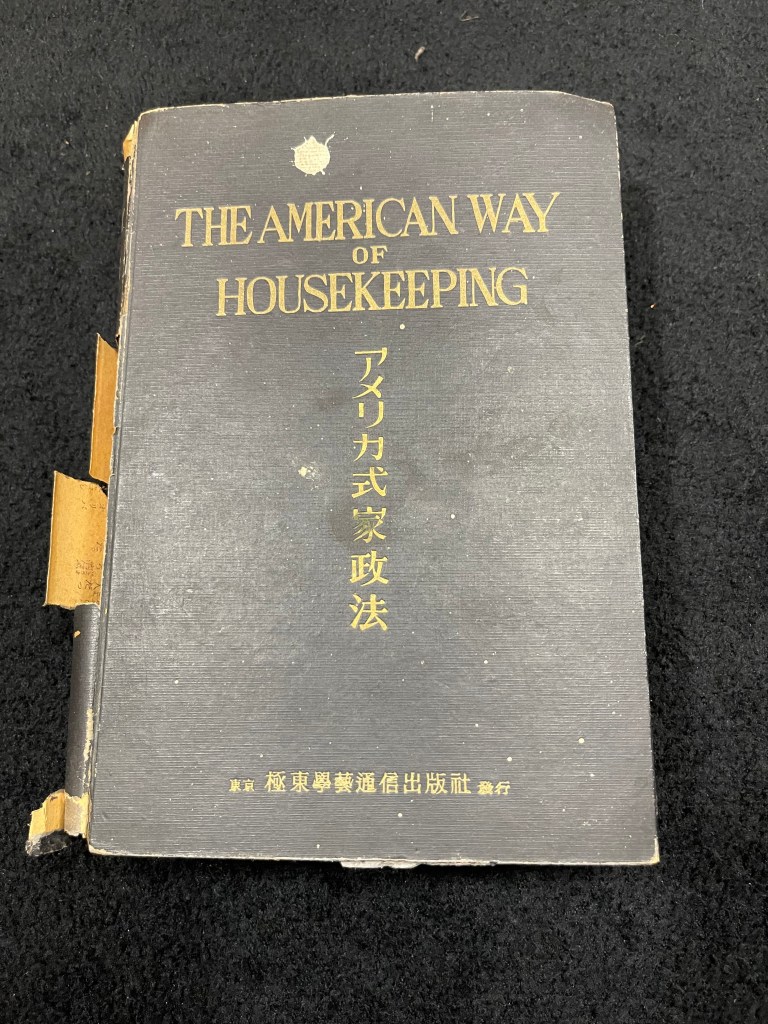
This battered and well worn volume runs to nearly 500 pages with illustrations and explanations. It is blatantly a manual to educate conquered Japanese women how to please their newly occupying American husbands. It was a different time and ethos and quite illuminating of the American WASP of the day. Observe the dedication page.
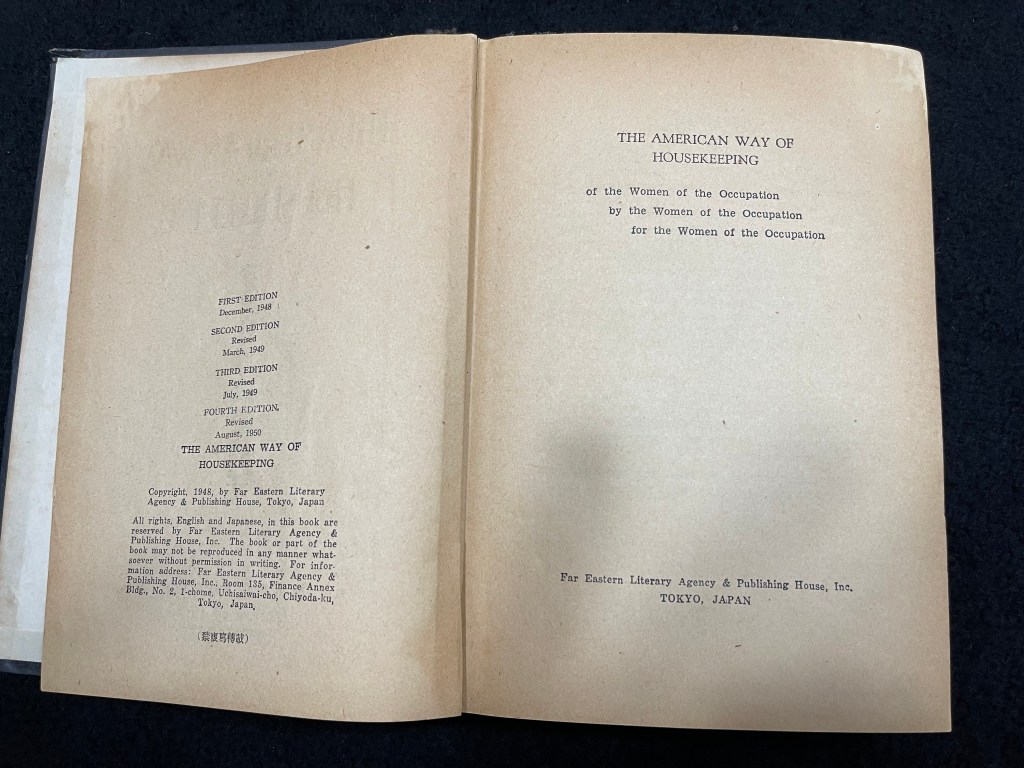
As you can see, it has a copyright of 1948, though this volume is in the fourth printing in 1950. Yes, our occupation went on a long time, obviously torturous to the vanquished population. It was printed and issued in Tokyo and is dedicated “of the Women of the Occupation; by the Women of the Occupation; for the Women of the Occupation.” How utterly civilized. Throughout the book there is an English text and a Japanese translation, so both parties to the interaction knew just what was expected. It covers a wide range of housekeeping topics.

There are a host of photographs of what were then modern American appliances to serve their husbands, shown above an electric clothes washing machines with instructions to the young Japanese wife on how to use them. There are also references to ironing boards and other innovations that were apparently unfamiliar. All in the service of pleasing their new mates.
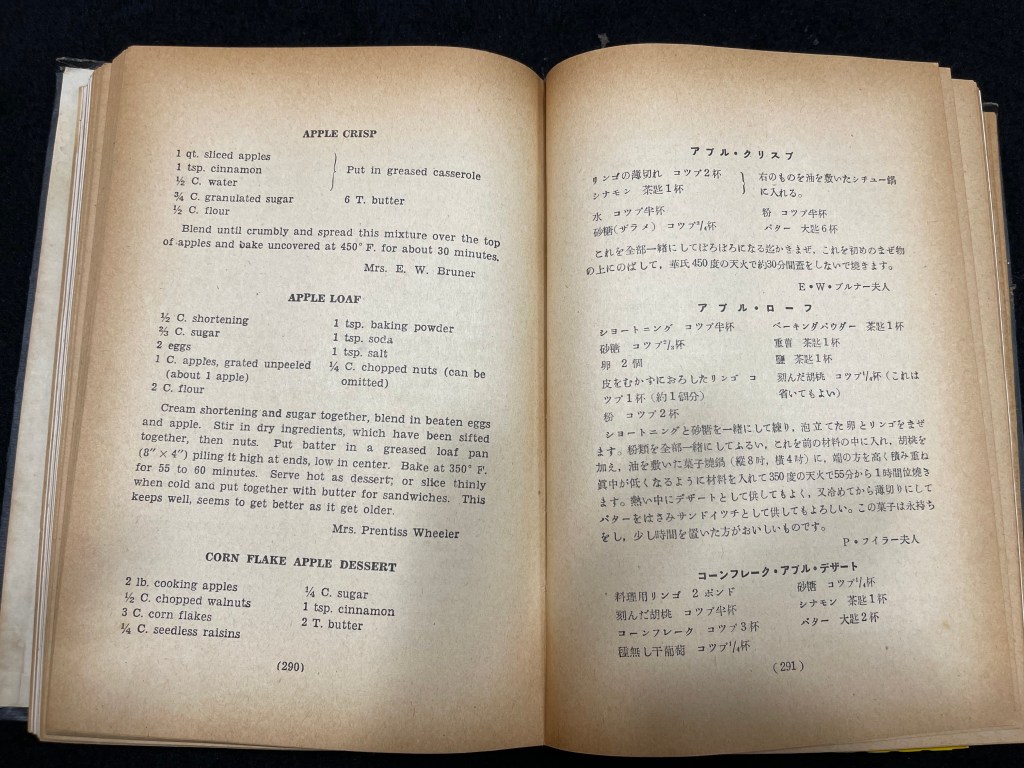
More than half the book is taken up with cooking equipment, techniques and recipes. Above are recipes for traditional American apple recipes but it includes examples for every meal, including appetizers and desserts. Ironically you can also find recipes for Japanese dishes like teriyaki (though adapted to an inexperienced American palate).
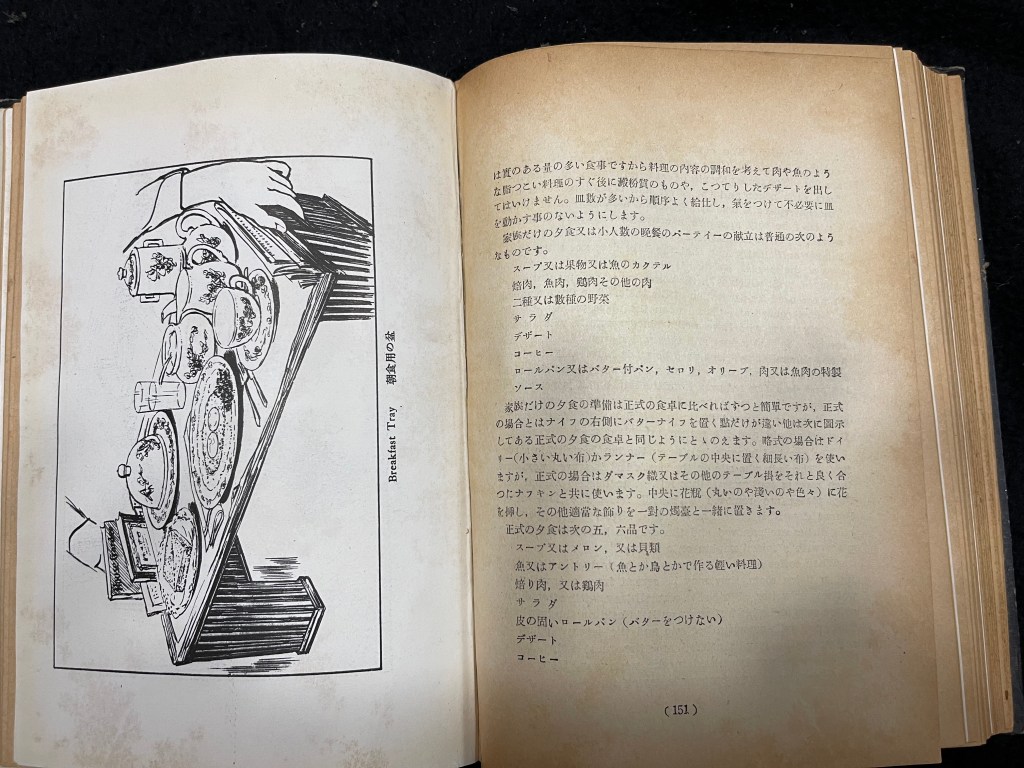
It also includes niceties like table settings and etiquette so that the new trophy wife can fit into an American setting. Here is a demonstration of what the American GI expects his daily breakfast tray to include.
While we know the treatment that conquerers give to conquered people, until I collected this book, I had no idea that such an explicit manual had been produced. This is an amazing and fascinating historical reference and a relic of that day.
 Walter Thinnes